Product line
Solar module equipment: stringers, laser cell cutters and PV module lines
ZeroLine supplies the machines that turn solar cells into modules: laser cell cutters that split full cells into halves, infrared stringers that solder them into strings, and the layup, bussing and complete lines around them, from 150 to 800 MW a year. The core machines come from a strategic partner factory and handle BC, TOPCon and PERC cells from 166 to 230 mm; our team has delivered a 300 MW module line in Bangladesh. We write your cell, busbar and string specification into the contract, accept each machine on your cells and train your team on site.
- Half-cells an hour per stringer; up to 15,000 on the integrated cutting and stringing system
- 1,100–6,000
- Breakage on the high-speed laser cell cutter, Grade A cells
- ≤ 0.05 %
- Module line sizes a year
- 150–800 MW
- Module production line delivered in Bangladesh
- 300 MW
Manufacturer renderings
Stringers and cell cutters
-
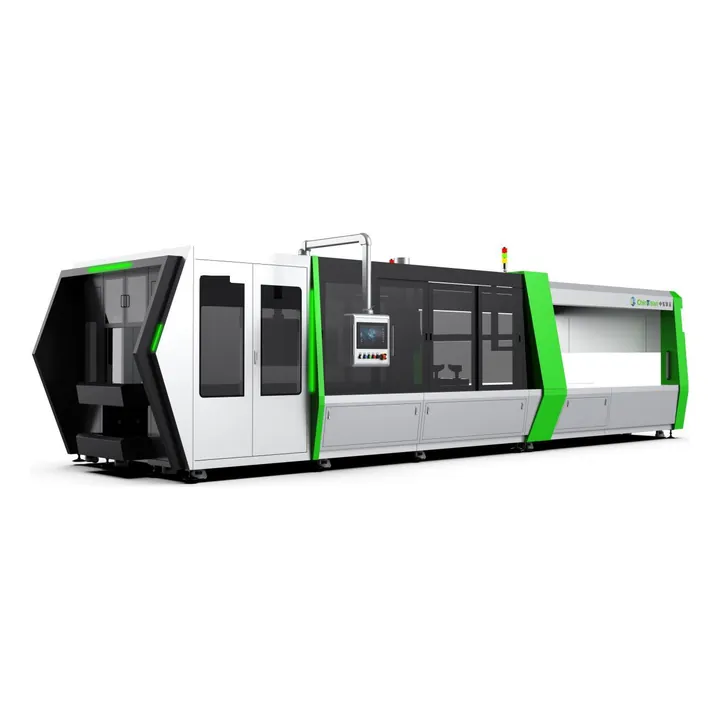
High-speed BC stringer CTM-BC60 (rendering) -
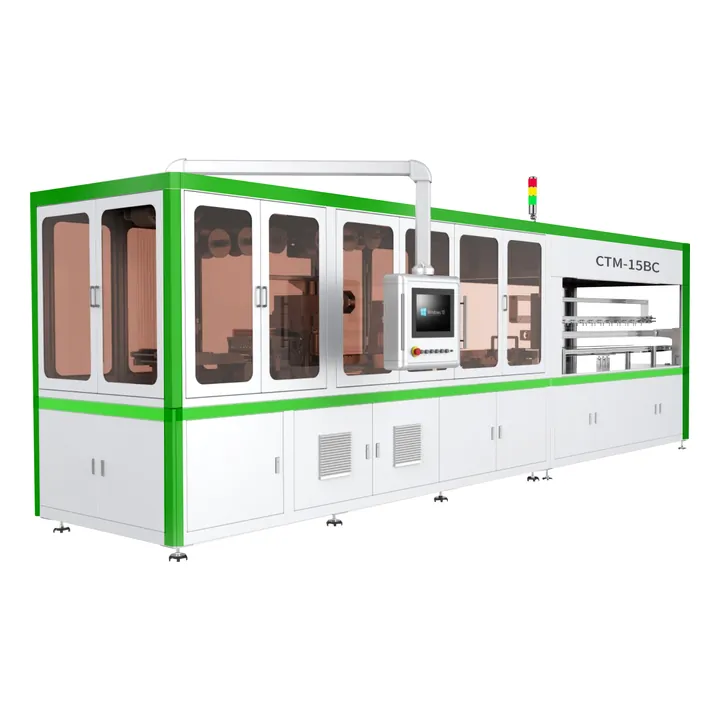
Stringer CTM-15BC (rendering) -
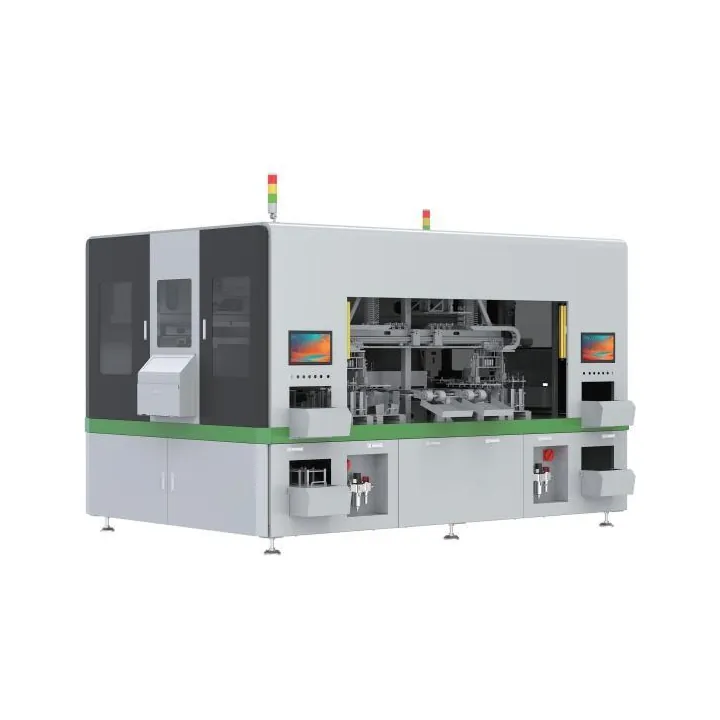
Laser cell cutter CTC-72S (rendering)
Scope
What we supply
-
Power
Stringers
- High-speed BC stringer CTM-BC60: 166–210 mm back-contact half- and third-cells, 3–20 busbars (25 on request), at least 4,800 half-cells an hour, breakage ≤ 0.25 %; the dual-lane CTM-BC60B reaches 6,000 an hour with up to 98 % uptime
- Stringer CTM-15 for TOPCon and PERC half-cells, 166–210 mm: about 1,100 an hour, strings up to 2,000 mm (2,500 mm after modification); CTM-15BC for back-contact cells, 1,000–1,500 an hour
- Integrated cutting and stringing system CTM-S150: loading, scribing, splitting, stringing and string discharge in one machine, up to 15,000 half-cells an hour, 166–230 mm cells
- Infrared welding, ±0.05–0.1 mm positioning with camera correction and cell defect inspection; string EL inspection as an option
-
Power
Laser cell cutters
- High-speed cutter CTC-72S: pulsed-laser grooving and continuous-laser thermal splitting with water cooling, at least 4,800 BC or 6,800 TOPCon and PERC full cells an hour on two lanes, breakage ≤ 0.05 %
- Water-assisted non-destructive cutter CTC-80S-BC for BC cells: up to 7,200 an hour, breakage ≤ 0.05 %, ±0.05 mm positioning
- Compact cutter CTC-20: 30 W Q-switched fiber laser, about 1,600 full cells an hour, 156–220 mm cells, single-phase 220 V, 1.0 × 0.65 m; the BC version CTC-20SBC, 2,000 an hour
-
Power
Module lines
- 150 MW a year with about 25–32 operators; 500–800 MW a year with about 27–34
- Single- and dual-glass modules with N-type, P-type, PERC, TOPCon or BC cells; modules 1,640–2,600 × 950–1,500 mm
- Layup and bussing in 20 s or less per module with full cells, 45 s or less with half-cells, up to 99 % uptime
- Turnkey BC module packaging line: cutting, stringing and control from one supplier, with design and commissioning teams that have worked in PV for over ten years
-
ZeroLine
What your plant needs
- BC stringer: 30 kW average, 45 kW peak; compressed air at 0.6–0.8 MPa and at least 1,200 L/min; 8.05 × 2.8 m, 7 t
- TOPCon and PERC stringer: three-phase 380 V, 15 kW average; at least 600 L/min of air; 6.9 × 1.8 m, 3 t, floor rated for 600 kg/m²
- High-speed cutter: 15 kW per side; deionized or purified water for the splitting cooler; 4.0 × 2.7 m, 5 t
-
ZeroLine
Acceptance and support
- Each machine is built and accepted for one reference cell: send the signed cell drawing. Other cells within the range need a tooling change, quoted separately
- Free training for operators and maintenance staff before acceptance
- Factory warranty: one year on the machine with lifetime repair service, a reply within 48 hours and a solution within 72 hours of a written fault report, unless your contract sets other terms
- Wear parts such as suction cups, springs and filters are outside the warranty and supplied on demand for the life of the machine
How it runs
How a module equipment project runs
- 01
Cells and target
Cell type, size and busbars, module format and the output you need a year.
- 02
Layout and proposal
Machines, line layout, staffing, utilities and a priced proposal.
- 03
Build
Machines built and set up for your reference cell.
- 04
Acceptance
Your cells run on the machines before crating; you watch live or on video.
- 05
Install and train
Installation, commissioning and training on your site.
Services
Services that come with it
- Sourcing and factory audit The right factory for your job, audited on site and compared like for like.
- Factory acceptance and inspection Nothing ships before it has run. You watch the test, then you pay.
- Installation and training Engineers on your site until it runs at rate, and a team that can run it after.
- Spare parts and support Spare parts, video support, service partners and upgrades for the life of the equipment.
FAQ
Questions buyers ask
What does a stringer do in solar module production?
It solders solar cells into strings with copper ribbon. Cells come from cassettes, a camera positions them, ribbon is laid over the busbars and infrared heat joins them; the finished strings go on to layup. Our stringers take 166–210 mm cells with 3 to 20 busbars.
How many cells an hour does a stringer make?
The CTM-15 strings about 1,100 TOPCon or PERC half-cells an hour. The high-speed CTM-BC60 strings at least 4,800 back-contact half-cells an hour. A longer welding time for a particular cell lowers the rate.
Why cut solar cells with a laser and water?
Half-cells reduce resistive losses in a module, but snapping a cell mechanically can start microcracks. The high-speed cutter grooves the cell with a pulsed laser and splits it with a continuous laser while water cools the cut. That keeps breakage at or below 0.05 % on Grade A cells.
How many people does a module line need?
About 25–32 operators for a 150 MW line and 27–34 for a 500–800 MW line, in the factory’s standard configurations. The number depends on how much of layup, framing and testing is automated.
Have you delivered a module line outside China?
Yes. Our team delivered a 300 MW PV module production line in Bangladesh, from factory acceptance to production ramp-up. We plan 150 MW lines for about 25–32 operators and 500–800 MW lines for about 27–34.
What warranty do the machines carry?
The factory warranty: one year on the machine and repair service for its life. After a written fault report the factory replies within 48 hours and proposes a solution within 72 hours. Wear parts such as suction cups and filters are not covered but stay available. Your contract can set other terms.
Can one stringer run different cells?
Within its range, yes: 166–210 mm cells and 3 to 20 busbars. Each change of busbar count or cell format needs its own tooling, so name every cell you plan to run before the order and we quote the tooling with the machine.
Start a project
Plan a module line
An empty plant, a part, a network or a product idea. Tell us where you are starting. An engineer replies with a plan and a quote.
- Emailsales@zerolineai.com
- WhatsApp+44 7762 362563
- OfficeWuhan, Hubei, China